



Co-created with Aspect Insure, a joint technology validation study.
Every specialty underwriter knows the feeling of a submission that reads wrong. Assurances that hedge. A survey that says less than it should. Controls described as future promises rather than present facts.
That feeling isn't superstition. It's judgement working on evidence. The problem has always been scale: what an underwriter can sense in one file, no one can tally reliably across thousands.
Together with Aspect Insure, a disciplined MGA writing high-hazard commercial property, we set out to test whether that evidence can be measured, and whether it genuinely predicts what risks go on to cost.
A test designed to be hard to pass
Aspect set a high bar. Their book was already disciplined and profitable, so there was little obvious slack to find. The Fluence Engine read submission language alone: no rating model, no pricing, no market data, no claims record for the account being scored. Every account was scored blind, with its own outcome hidden from the engine, across 3,892 bound and closed policies.
Then we compared the scores with what actually happened.
What the language knew
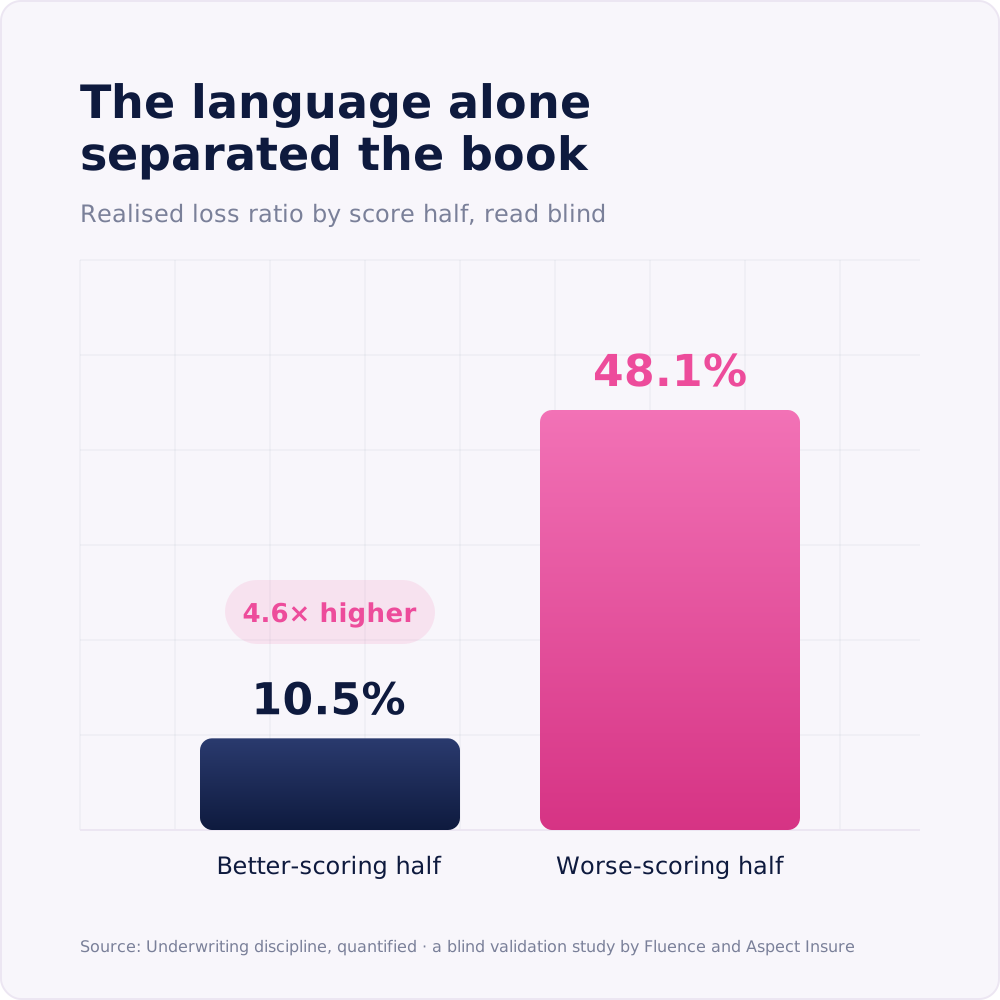
Reading the words alone, the engine separated the book. The better-scoring half ran at a 10.5% loss ratio. The worse half ran at 48.1%. That's 4.6 times higher.
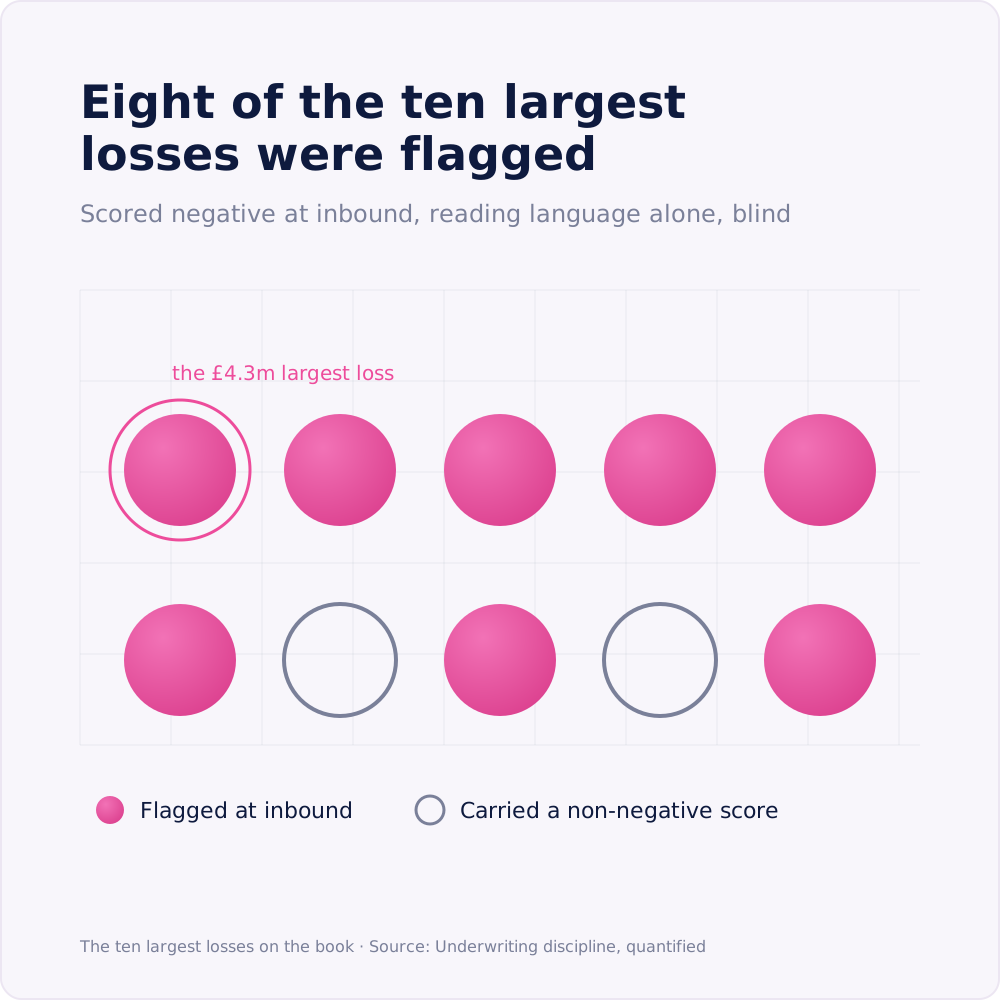
Crucially, the signal was new information. The score's correlation with rate-on-line was 0.003. Effectively zero. This wasn't the price restated. On risks the market priced as twins, matched by category, line size and premium, the side the engine read worse went on to carry 76% of the claims, extending to 80.6% with recently developed losses. And eight of the ten largest losses on the book scored negative at inbound, blind, including the largest at £4.3m.
The rating model saw identical risks. The language told them apart.
What acting on it would have been worth
We then asked the commercial question: what if the book had been re-weighted on these blind scores, with total premium held completely flat? No growth and no new business. Selection alone.
The developed loss ratio falls from 28.2% to 11.1%. That's £14.6m less in losses on the same premium.
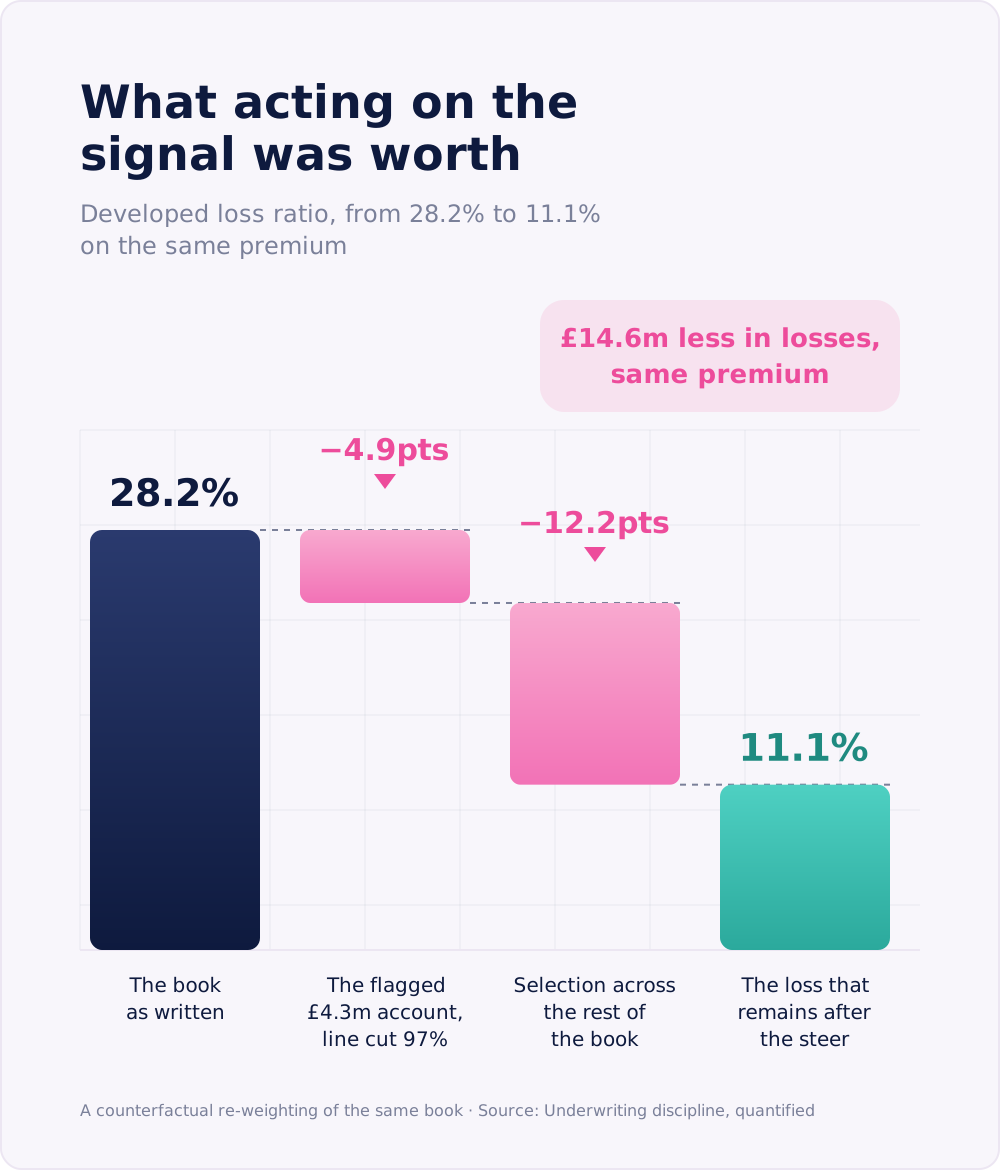
It's a counterfactual, measured under controls a governance committee can inspect. And it survives the stress tests. Strip out the ten largest losses and the selection still improves the remainder.
Judgement scaled, not replaced
The result is not a claim that underwriters missed things they should have caught. The opposite. Aspect's underwriters were already selecting well; the engine measured that judgement, made it repeatable, and found where it could be applied more consistently across the book.
The score steers; it never binds. Underwriters keep the pen. Leadership sets the appetite. And because the engine is deterministic, with no generative AI in the decision path and every score traceable to the patterns that set it, the whole mechanism stands up to model governance.
As Oli Williamson, CUO of Aspect Insure, puts it in his foreword: the study establishes that submission language contains measurable underwriting evidence that isn't fully captured elsewhere in the process.
Property is the proof. Your book is the hypothesis.
Aspect's result isn't a number to inherit. It's a hypothesis to test. Each book is its own test, run blind against its own loss history. The only way to size the signal is to measure it.
The full study is available to download, including the three experiments, the stress tests, the limitations, and how the engine works.


